| Record Information |
|---|
| Version | 5.0 |
|---|
| Status | Expected but not Quantified |
|---|
| Creation Date | 2012-09-06 15:16:52 UTC |
|---|
| Update Date | 2022-03-07 02:52:03 UTC |
|---|
| HMDB ID | HMDB0015633 |
|---|
| Secondary Accession Numbers | |
|---|
| Metabolite Identification |
|---|
| Common Name | Amisulpride |
|---|
| Description | Amisulpride, also known as deniban or solian, belongs to the class of organic compounds known as aminobenzamides. These are organic compounds containing a benzamide moiety with an amine group attached to the benzene ring. Amisulpride is a very strong basic compound (based on its pKa). Another recent study concluded that amisulpride is an appropriate first-line treatment for the management of acute psychosis. The British National Formulary recommends a gradual withdrawal when discontinuing antipsychotics to avoid acute withdrawal syndrome or rapid relapse. The clinical implications of this, if any, are unclear. |
|---|
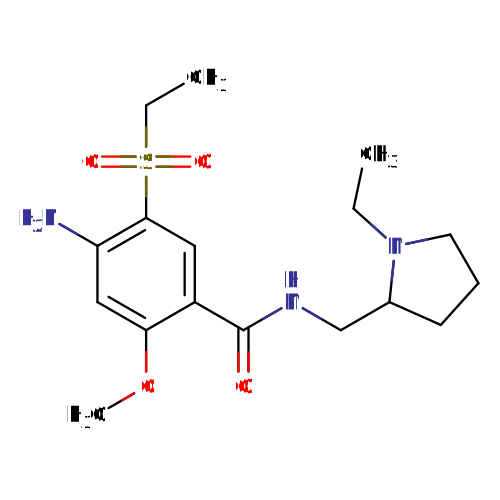
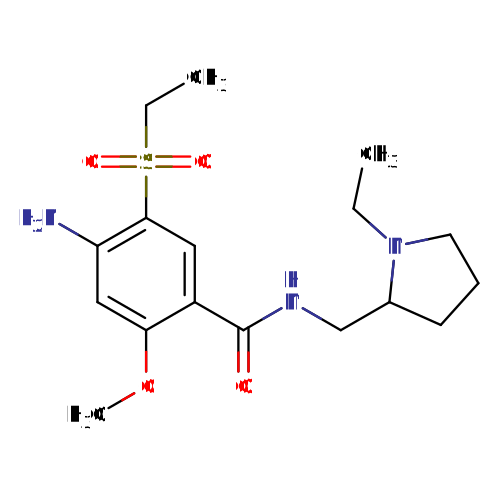
| Structure | CCN1CCCC1CNC(=O)C1=CC(=C(N)C=C1OC)S(=O)(=O)CC InChI=1S/C17H27N3O4S/c1-4-20-8-6-7-12(20)11-19-17(21)13-9-16(25(22,23)5-2)14(18)10-15(13)24-3/h9-10,12H,4-8,11,18H2,1-3H3,(H,19,21) |
|---|
| Synonyms | | Value | Source |
|---|
| 4-Amino-N-((1-ethyl-2-pyrrolidinyl)methyl)-5-(ethylsulfonyl)-2-methoxybenzamide | ChEBI | | 4-Amino-N-((1-ethyl-2-pyrrolidinyl)methyl)-5-(ethylsulfonyl)-O-anisamide | ChEBI | | Aminosultopride | ChEBI | | Amisulprida | ChEBI | | Amisulpridum | ChEBI | | Deniban | Kegg | | Solian | Kegg | | 4-Amino-N-((1-ethyl-2-pyrrolidinyl)methyl)-5-(ethylsulphonyl)-2-methoxybenzamide | Generator | | 4-Amino-N-((1-ethyl-2-pyrrolidinyl)methyl)-5-(ethylsulphonyl)-O-anisamide | Generator | | Barnetil | HMDB | | Sultopride hydrochloride | HMDB | | N-(Ethyl-1-pyrrolidinyl- 2-methyl)methoxy-2-ethylsulfonyl-5-benzamide | HMDB | | Sultopride | HMDB |
|
|---|
| Chemical Formula | C17H27N3O4S |
|---|
| Average Molecular Weight | 369.479 |
|---|
| Monoisotopic Molecular Weight | 369.172227057 |
|---|
| IUPAC Name | 4-amino-5-(ethanesulfonyl)-N-[(1-ethylpyrrolidin-2-yl)methyl]-2-methoxybenzamide |
|---|
| Traditional Name | amisulpride |
|---|
| CAS Registry Number | 53583-79-2 |
|---|
| SMILES | CCN1CCCC1CNC(=O)C1=CC(=C(N)C=C1OC)S(=O)(=O)CC |
|---|
| InChI Identifier | InChI=1S/C17H27N3O4S/c1-4-20-8-6-7-12(20)11-19-17(21)13-9-16(25(22,23)5-2)14(18)10-15(13)24-3/h9-10,12H,4-8,11,18H2,1-3H3,(H,19,21) |
|---|
| InChI Key | NTJOBXMMWNYJFB-UHFFFAOYSA-N |
|---|
| Chemical Taxonomy |
|---|
| Description | Belongs to the class of organic compounds known as aminobenzamides. These are organic compounds containing a benzamide moiety with an amine group attached to the benzene ring. |
|---|
| Kingdom | Organic compounds |
|---|
| Super Class | Benzenoids |
|---|
| Class | Benzene and substituted derivatives |
|---|
| Sub Class | Benzoic acids and derivatives |
|---|
| Direct Parent | Aminobenzamides |
|---|
| Alternative Parents | |
|---|
| Substituents | - Aminobenzamide
- Methoxyaniline
- Benzamide
- Aminophenyl ether
- Benzenesulfonyl group
- Phenol ether
- Aniline or substituted anilines
- Methoxybenzene
- Benzoyl
- Phenoxy compound
- Anisole
- Alkyl aryl ether
- N-alkylpyrrolidine
- Pyrrolidine
- Sulfone
- Sulfonyl
- Carboxamide group
- Tertiary aliphatic amine
- Secondary carboxylic acid amide
- Amino acid or derivatives
- Tertiary amine
- Azacycle
- Organoheterocyclic compound
- Carboxylic acid derivative
- Ether
- Organopnictogen compound
- Organic oxygen compound
- Amine
- Organic nitrogen compound
- Hydrocarbon derivative
- Organic oxide
- Organonitrogen compound
- Organooxygen compound
- Organosulfur compound
- Primary amine
- Aromatic heteromonocyclic compound
|
|---|
| Molecular Framework | Aromatic heteromonocyclic compounds |
|---|
| External Descriptors | |
|---|
| Ontology |
|---|
| Not Available | Not Available |
|---|
| Physical Properties |
|---|
| State | Solid |
|---|
| Experimental Molecular Properties | | Property | Value | Reference |
|---|
| Melting Point | 126 - 127 °C | Not Available | | Boiling Point | Not Available | Not Available | | Water Solubility | 0.29 g/L | Not Available | | LogP | 1.10 | MANNHOLD,R ET AL. (1990) |
|
|---|
| Experimental Chromatographic Properties | Experimental Collision Cross Sections| Adduct Type | Data Source | CCS Value (Å2) | Reference |
|---|
| [M+H]+ | CBM | 193.1 | 30932474 |
|
|---|
| Predicted Molecular Properties | |
|---|
| Predicted Chromatographic Properties | Predicted Collision Cross SectionsPredicted Retention Times Underivatized| Chromatographic Method | Retention Time | Reference |
|---|
| Measured using a Waters Acquity ultraperformance liquid chromatography (UPLC) ethylene-bridged hybrid (BEH) C18 column (100 mm × 2.1 mm; 1.7 μmparticle diameter). Predicted by Afia on May 17, 2022. Predicted by Afia on May 17, 2022. | 4.26 minutes | 32390414 | | Predicted by Siyang on May 30, 2022 | 9.6616 minutes | 33406817 | | Predicted by Siyang using ReTip algorithm on June 8, 2022 | 3.05 minutes | 32390414 | | AjsUoB = Accucore 150 Amide HILIC with 10mM Ammonium Formate, 0.1% Formic Acid | 186.8 seconds | 40023050 | | Fem_Long = Waters ACQUITY UPLC HSS T3 C18 with Water:MeOH and 0.1% Formic Acid | 705.4 seconds | 40023050 | | Fem_Lipids = Ascentis Express C18 with (60:40 water:ACN):(90:10 IPA:ACN) and 10mM NH4COOH + 0.1% Formic Acid | 180.3 seconds | 40023050 | | Life_Old = Waters ACQUITY UPLC BEH C18 with Water:(20:80 acetone:ACN) and 0.1% Formic Acid | 112.6 seconds | 40023050 | | Life_New = RP Waters ACQUITY UPLC HSS T3 C18 with Water:(30:70 MeOH:ACN) and 0.1% Formic Acid | 155.5 seconds | 40023050 | | RIKEN = Waters ACQUITY UPLC BEH C18 with Water:ACN and 0.1% Formic Acid | 53.2 seconds | 40023050 | | Eawag_XBridgeC18 = XBridge C18 3.5u 2.1x50 mm with Water:MeOH and 0.1% Formic Acid | 244.7 seconds | 40023050 | | BfG_NTS_RP1 =Agilent Zorbax Eclipse Plus C18 (2.1 mm x 150 mm, 3.5 um) with Water:ACN and 0.1% Formic Acid | 306.6 seconds | 40023050 | | HILIC_BDD_2 = Merck SeQuant ZIC-HILIC with ACN(0.1% formic acid):water(16 mM ammonium formate) | 512.1 seconds | 40023050 | | UniToyama_Atlantis = RP Waters Atlantis T3 (2.1 x 150 mm, 5 um) with ACN:Water and 0.1% Formic Acid | 619.3 seconds | 40023050 | | BDD_C18 = Hypersil Gold 1.9µm C18 with Water:ACN and 0.1% Formic Acid | 98.3 seconds | 40023050 | | UFZ_Phenomenex = Kinetex Core-Shell C18 2.6 um, 3.0 x 100 mm, Phenomenex with Water:MeOH and 0.1% Formic Acid | 709.1 seconds | 40023050 | | SNU_RIKEN_POS = Waters ACQUITY UPLC BEH C18 with Water:ACN and 0.1% Formic Acid | 183.8 seconds | 40023050 | | RPMMFDA = Waters ACQUITY UPLC BEH C18 with Water:ACN and 0.1% Formic Acid | 213.2 seconds | 40023050 | | MTBLS87 = Merck SeQuant ZIC-pHILIC column with ACN:Water and :ammonium carbonate | 538.5 seconds | 40023050 | | KI_GIAR_zic_HILIC_pH2_7 = Merck SeQuant ZIC-HILIC with ACN:Water and 0.1% FA | 462.9 seconds | 40023050 | | Meister zic-pHILIC pH9.3 = Merck SeQuant ZIC-pHILIC column with ACN:Water 5mM NH4Ac pH9.3 and 5mM ammonium acetate in water | 185.4 seconds | 40023050 |
Predicted Kovats Retention IndicesUnderivatizedDerivatized| Derivative Name / Structure | SMILES | Kovats RI Value | Column Type | Reference |
|---|
| Amisulpride,1TMS,isomer #1 | CCN1CCCC1CNC(=O)C1=CC(S(=O)(=O)CC)=C(N[Si](C)(C)C)C=C1OC | 3250.4 | Semi standard non polar | 33892256 | | Amisulpride,1TMS,isomer #1 | CCN1CCCC1CNC(=O)C1=CC(S(=O)(=O)CC)=C(N[Si](C)(C)C)C=C1OC | 3126.0 | Standard non polar | 33892256 | | Amisulpride,1TMS,isomer #1 | CCN1CCCC1CNC(=O)C1=CC(S(=O)(=O)CC)=C(N[Si](C)(C)C)C=C1OC | 4391.1 | Standard polar | 33892256 | | Amisulpride,1TMS,isomer #2 | CCN1CCCC1CN(C(=O)C1=CC(S(=O)(=O)CC)=C(N)C=C1OC)[Si](C)(C)C | 3143.1 | Semi standard non polar | 33892256 | | Amisulpride,1TMS,isomer #2 | CCN1CCCC1CN(C(=O)C1=CC(S(=O)(=O)CC)=C(N)C=C1OC)[Si](C)(C)C | 3066.0 | Standard non polar | 33892256 | | Amisulpride,1TMS,isomer #2 | CCN1CCCC1CN(C(=O)C1=CC(S(=O)(=O)CC)=C(N)C=C1OC)[Si](C)(C)C | 4598.9 | Standard polar | 33892256 | | Amisulpride,2TMS,isomer #1 | CCN1CCCC1CN(C(=O)C1=CC(S(=O)(=O)CC)=C(N[Si](C)(C)C)C=C1OC)[Si](C)(C)C | 3198.6 | Semi standard non polar | 33892256 | | Amisulpride,2TMS,isomer #1 | CCN1CCCC1CN(C(=O)C1=CC(S(=O)(=O)CC)=C(N[Si](C)(C)C)C=C1OC)[Si](C)(C)C | 3235.4 | Standard non polar | 33892256 | | Amisulpride,2TMS,isomer #1 | CCN1CCCC1CN(C(=O)C1=CC(S(=O)(=O)CC)=C(N[Si](C)(C)C)C=C1OC)[Si](C)(C)C | 4066.4 | Standard polar | 33892256 | | Amisulpride,2TMS,isomer #2 | CCN1CCCC1CNC(=O)C1=CC(S(=O)(=O)CC)=C(N([Si](C)(C)C)[Si](C)(C)C)C=C1OC | 3165.9 | Semi standard non polar | 33892256 | | Amisulpride,2TMS,isomer #2 | CCN1CCCC1CNC(=O)C1=CC(S(=O)(=O)CC)=C(N([Si](C)(C)C)[Si](C)(C)C)C=C1OC | 3318.9 | Standard non polar | 33892256 | | Amisulpride,2TMS,isomer #2 | CCN1CCCC1CNC(=O)C1=CC(S(=O)(=O)CC)=C(N([Si](C)(C)C)[Si](C)(C)C)C=C1OC | 4008.3 | Standard polar | 33892256 | | Amisulpride,3TMS,isomer #1 | CCN1CCCC1CN(C(=O)C1=CC(S(=O)(=O)CC)=C(N([Si](C)(C)C)[Si](C)(C)C)C=C1OC)[Si](C)(C)C | 3141.7 | Semi standard non polar | 33892256 | | Amisulpride,3TMS,isomer #1 | CCN1CCCC1CN(C(=O)C1=CC(S(=O)(=O)CC)=C(N([Si](C)(C)C)[Si](C)(C)C)C=C1OC)[Si](C)(C)C | 3436.2 | Standard non polar | 33892256 | | Amisulpride,3TMS,isomer #1 | CCN1CCCC1CN(C(=O)C1=CC(S(=O)(=O)CC)=C(N([Si](C)(C)C)[Si](C)(C)C)C=C1OC)[Si](C)(C)C | 3683.6 | Standard polar | 33892256 | | Amisulpride,1TBDMS,isomer #1 | CCN1CCCC1CNC(=O)C1=CC(S(=O)(=O)CC)=C(N[Si](C)(C)C(C)(C)C)C=C1OC | 3461.9 | Semi standard non polar | 33892256 | | Amisulpride,1TBDMS,isomer #1 | CCN1CCCC1CNC(=O)C1=CC(S(=O)(=O)CC)=C(N[Si](C)(C)C(C)(C)C)C=C1OC | 3383.0 | Standard non polar | 33892256 | | Amisulpride,1TBDMS,isomer #1 | CCN1CCCC1CNC(=O)C1=CC(S(=O)(=O)CC)=C(N[Si](C)(C)C(C)(C)C)C=C1OC | 4403.7 | Standard polar | 33892256 | | Amisulpride,1TBDMS,isomer #2 | CCN1CCCC1CN(C(=O)C1=CC(S(=O)(=O)CC)=C(N)C=C1OC)[Si](C)(C)C(C)(C)C | 3385.6 | Semi standard non polar | 33892256 | | Amisulpride,1TBDMS,isomer #2 | CCN1CCCC1CN(C(=O)C1=CC(S(=O)(=O)CC)=C(N)C=C1OC)[Si](C)(C)C(C)(C)C | 3300.3 | Standard non polar | 33892256 | | Amisulpride,1TBDMS,isomer #2 | CCN1CCCC1CN(C(=O)C1=CC(S(=O)(=O)CC)=C(N)C=C1OC)[Si](C)(C)C(C)(C)C | 4619.2 | Standard polar | 33892256 | | Amisulpride,2TBDMS,isomer #1 | CCN1CCCC1CN(C(=O)C1=CC(S(=O)(=O)CC)=C(N[Si](C)(C)C(C)(C)C)C=C1OC)[Si](C)(C)C(C)(C)C | 3623.1 | Semi standard non polar | 33892256 | | Amisulpride,2TBDMS,isomer #1 | CCN1CCCC1CN(C(=O)C1=CC(S(=O)(=O)CC)=C(N[Si](C)(C)C(C)(C)C)C=C1OC)[Si](C)(C)C(C)(C)C | 3725.6 | Standard non polar | 33892256 | | Amisulpride,2TBDMS,isomer #1 | CCN1CCCC1CN(C(=O)C1=CC(S(=O)(=O)CC)=C(N[Si](C)(C)C(C)(C)C)C=C1OC)[Si](C)(C)C(C)(C)C | 4125.8 | Standard polar | 33892256 | | Amisulpride,2TBDMS,isomer #2 | CCN1CCCC1CNC(=O)C1=CC(S(=O)(=O)CC)=C(N([Si](C)(C)C(C)(C)C)[Si](C)(C)C(C)(C)C)C=C1OC | 3611.3 | Semi standard non polar | 33892256 | | Amisulpride,2TBDMS,isomer #2 | CCN1CCCC1CNC(=O)C1=CC(S(=O)(=O)CC)=C(N([Si](C)(C)C(C)(C)C)[Si](C)(C)C(C)(C)C)C=C1OC | 3794.3 | Standard non polar | 33892256 | | Amisulpride,2TBDMS,isomer #2 | CCN1CCCC1CNC(=O)C1=CC(S(=O)(=O)CC)=C(N([Si](C)(C)C(C)(C)C)[Si](C)(C)C(C)(C)C)C=C1OC | 4032.1 | Standard polar | 33892256 | | Amisulpride,3TBDMS,isomer #1 | CCN1CCCC1CN(C(=O)C1=CC(S(=O)(=O)CC)=C(N([Si](C)(C)C(C)(C)C)[Si](C)(C)C(C)(C)C)C=C1OC)[Si](C)(C)C(C)(C)C | 3772.5 | Semi standard non polar | 33892256 | | Amisulpride,3TBDMS,isomer #1 | CCN1CCCC1CN(C(=O)C1=CC(S(=O)(=O)CC)=C(N([Si](C)(C)C(C)(C)C)[Si](C)(C)C(C)(C)C)C=C1OC)[Si](C)(C)C(C)(C)C | 4133.4 | Standard non polar | 33892256 | | Amisulpride,3TBDMS,isomer #1 | CCN1CCCC1CN(C(=O)C1=CC(S(=O)(=O)CC)=C(N([Si](C)(C)C(C)(C)C)[Si](C)(C)C(C)(C)C)C=C1OC)[Si](C)(C)C(C)(C)C | 3840.4 | Standard polar | 33892256 |
|
|---|
| GC-MS Spectra| Spectrum Type | Description | Splash Key | Deposition Date | Source | View |
|---|
| Predicted GC-MS | Predicted GC-MS Spectrum - Amisulpride GC-MS (Non-derivatized) - 70eV, Positive | splash10-002g-9054000000-b1dc7fa1718d7f3a0b9c | 2017-09-01 | Wishart Lab | View Spectrum | | Predicted GC-MS | Predicted GC-MS Spectrum - Amisulpride GC-MS (Non-derivatized) - 70eV, Positive | Not Available | 2021-10-12 | Wishart Lab | View Spectrum |
MS/MS Spectra| Spectrum Type | Description | Splash Key | Deposition Date | Source | View |
|---|
| Experimental LC-MS/MS | LC-MS/MS Spectrum - Amisulpride LC-ESI-ITFT , negative-QTOF | splash10-0006-0609000000-2b372299b7870a4920eb | 2017-09-14 | HMDB team, MONA | View Spectrum | | Experimental LC-MS/MS | LC-MS/MS Spectrum - Amisulpride LC-ESI-ITFT , negative-QTOF | splash10-014i-0009000000-99c1cc37ab9cf4683323 | 2017-09-14 | HMDB team, MONA | View Spectrum | | Experimental LC-MS/MS | LC-MS/MS Spectrum - Amisulpride LC-ESI-ITFT , negative-QTOF | splash10-014i-0409000000-4e053b8ec1d55ced8499 | 2017-09-14 | HMDB team, MONA | View Spectrum | | Experimental LC-MS/MS | LC-MS/MS Spectrum - Amisulpride LC-ESI-ITFT , negative-QTOF | splash10-004l-0974000000-de9354d79437a4df60bc | 2017-09-14 | HMDB team, MONA | View Spectrum | | Experimental LC-MS/MS | LC-MS/MS Spectrum - Amisulpride LC-ESI-ITFT , negative-QTOF | splash10-01q9-0900000000-f91d53fb9c883bae9ca3 | 2017-09-14 | HMDB team, MONA | View Spectrum | | Experimental LC-MS/MS | LC-MS/MS Spectrum - Amisulpride LC-ESI-ITFT , negative-QTOF | splash10-001i-0900000000-324b93e2df83509f8048 | 2017-09-14 | HMDB team, MONA | View Spectrum | | Experimental LC-MS/MS | LC-MS/MS Spectrum - Amisulpride LC-ESI-ITFT , negative-QTOF | splash10-014i-0009000000-99ab45809f8e56fbb616 | 2017-09-14 | HMDB team, MONA | View Spectrum | | Experimental LC-MS/MS | LC-MS/MS Spectrum - Amisulpride LC-ESI-ITFT , negative-QTOF | splash10-014l-0109000000-93205a0e84bbb061506a | 2017-09-14 | HMDB team, MONA | View Spectrum | | Experimental LC-MS/MS | LC-MS/MS Spectrum - Amisulpride LC-ESI-ITFT , negative-QTOF | splash10-057i-0960000000-23d53c22f66a40ded55b | 2017-09-14 | HMDB team, MONA | View Spectrum | | Experimental LC-MS/MS | LC-MS/MS Spectrum - Amisulpride LC-ESI-ITFT , negative-QTOF | splash10-0006-0509000000-de0803e7c69539424a4e | 2017-09-14 | HMDB team, MONA | View Spectrum | | Experimental LC-MS/MS | LC-MS/MS Spectrum - Amisulpride LC-ESI-QTOF , positive-QTOF | splash10-00di-0019000000-7dec57b5001ab24504cc | 2017-09-14 | HMDB team, MONA | View Spectrum | | Experimental LC-MS/MS | LC-MS/MS Spectrum - Amisulpride LC-ESI-QTOF , positive-QTOF | splash10-00di-0019000000-c532dacf370f0075220b | 2017-09-14 | HMDB team, MONA | View Spectrum | | Experimental LC-MS/MS | LC-MS/MS Spectrum - Amisulpride LC-ESI-QTOF , positive-QTOF | splash10-0006-0092000000-6deb7fed54b4631e9813 | 2017-09-14 | HMDB team, MONA | View Spectrum | | Experimental LC-MS/MS | LC-MS/MS Spectrum - Amisulpride LC-ESI-QTOF , positive-QTOF | splash10-0005-0980000000-c78d2a361bbc674b41ce | 2017-09-14 | HMDB team, MONA | View Spectrum | | Experimental LC-MS/MS | LC-MS/MS Spectrum - Amisulpride LC-ESI-QTOF , positive-QTOF | splash10-0005-0960000000-6a4706ff5588c4035137 | 2017-09-14 | HMDB team, MONA | View Spectrum | | Experimental LC-MS/MS | LC-MS/MS Spectrum - Amisulpride LC-ESI-ITFT , positive-QTOF | splash10-0006-0190000000-e410c0158058e8740df0 | 2017-09-14 | HMDB team, MONA | View Spectrum | | Experimental LC-MS/MS | LC-MS/MS Spectrum - Amisulpride LC-ESI-ITFT , positive-QTOF | splash10-00di-0009000000-2237ffbc12b8e6459da5 | 2017-09-14 | HMDB team, MONA | View Spectrum | | Experimental LC-MS/MS | LC-MS/MS Spectrum - Amisulpride LC-ESI-ITFT , positive-QTOF | splash10-00di-0029000000-2143af7abc829fd8cacd | 2017-09-14 | HMDB team, MONA | View Spectrum | | Experimental LC-MS/MS | LC-MS/MS Spectrum - Amisulpride LC-ESI-ITFT , positive-QTOF | splash10-0006-0290000000-bb210e691e1906ae74a7 | 2017-09-14 | HMDB team, MONA | View Spectrum | | Predicted LC-MS/MS | Predicted LC-MS/MS Spectrum - Amisulpride 10V, Positive-QTOF | splash10-0h90-0519000000-5ab63698962ae89e61c4 | 2016-08-03 | Wishart Lab | View Spectrum | | Predicted LC-MS/MS | Predicted LC-MS/MS Spectrum - Amisulpride 20V, Positive-QTOF | splash10-03fr-2931000000-0389f02977c474a38ddb | 2016-08-03 | Wishart Lab | View Spectrum | | Predicted LC-MS/MS | Predicted LC-MS/MS Spectrum - Amisulpride 40V, Positive-QTOF | splash10-0inc-9410000000-85d4a156f97187c4fdbe | 2016-08-03 | Wishart Lab | View Spectrum | | Predicted LC-MS/MS | Predicted LC-MS/MS Spectrum - Amisulpride 10V, Negative-QTOF | splash10-014i-0009000000-5027ef7cd64034ec73ed | 2016-08-04 | Wishart Lab | View Spectrum | | Predicted LC-MS/MS | Predicted LC-MS/MS Spectrum - Amisulpride 20V, Negative-QTOF | splash10-006x-1239000000-9ed19ba6319c5152a548 | 2016-08-04 | Wishart Lab | View Spectrum | | Predicted LC-MS/MS | Predicted LC-MS/MS Spectrum - Amisulpride 40V, Negative-QTOF | splash10-00r6-8961000000-6b1c70a700a07ca0e565 | 2016-08-04 | Wishart Lab | View Spectrum |
|
|---|
| General References | - Weizman T, Pick CG, Backer MM, Rigai T, Bloch M, Schreiber S: The antinociceptive effect of amisulpride in mice is mediated through opioid mechanisms. Eur J Pharmacol. 2003 Oct 8;478(2-3):155-9. [PubMed:14575800 ]
- Rosenzweig P, Canal M, Patat A, Bergougnan L, Zieleniuk I, Bianchetti G: A review of the pharmacokinetics, tolerability and pharmacodynamics of amisulpride in healthy volunteers. Hum Psychopharmacol. 2002 Jan;17(1):1-13. [PubMed:12404702 ]
- Leucht S, Pitschel-Walz G, Engel RR, Kissling W: Amisulpride, an unusual "atypical" antipsychotic: a meta-analysis of randomized controlled trials. Am J Psychiatry. 2002 Feb;159(2):180-90. [PubMed:11823257 ]
- Moller HJ: Amisulpride: limbic specificity and the mechanism of antipsychotic atypicality. Prog Neuropsychopharmacol Biol Psychiatry. 2003 Oct;27(7):1101-11. [PubMed:14642970 ]
|
|---|