
Showing metabocard for Ardeparin (HMDB0014551)
| Record Information | |||||||||||||||||||||||||
|---|---|---|---|---|---|---|---|---|---|---|---|---|---|---|---|---|---|---|---|---|---|---|---|---|---|
| Version | 5.0 | ||||||||||||||||||||||||
| Status | Expected but not Quantified | ||||||||||||||||||||||||
| Creation Date | 2012-09-06 15:16:49 UTC | ||||||||||||||||||||||||
| Update Date | 2022-03-07 02:51:39 UTC | ||||||||||||||||||||||||
| HMDB ID | HMDB0014551 | ||||||||||||||||||||||||
| Secondary Accession Numbers |
| ||||||||||||||||||||||||
| Metabolite Identification | |||||||||||||||||||||||||
| Common Name | Ardeparin | ||||||||||||||||||||||||
| Description | Ardeparin, marketed under the US trade name Normiflo, is a low molecular weight heparin (LMWH) anticoagulant used for the prevention of postoperative venous thrombosis. Ardeparin is derived via peroxide degradation of heparin extracted from porcine intestinal mucosa. Its molecular weight ranges from 2000 to 15,000 with an average molecular weight of 5500 to 6500. Normiflo was withdrawn from the US market in March 2000. | ||||||||||||||||||||||||
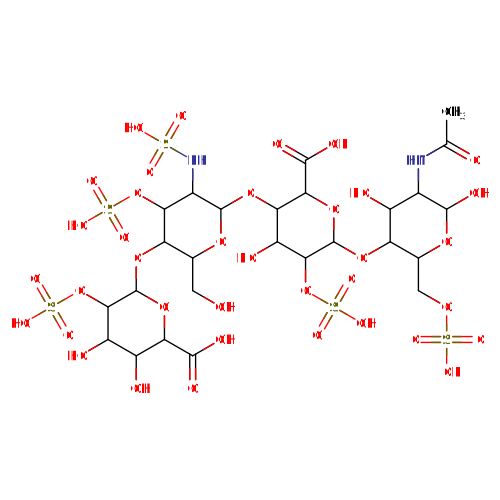
| Structure | Structure for HMDB0014551 (Ardeparin)
| ||||||||||||||||||||||||
| Synonyms | Not Available | ||||||||||||||||||||||||
| Chemical Formula | C26H42N2O37S5 | ||||||||||||||||||||||||
| Average Molecular Weight | 1134.928 | ||||||||||||||||||||||||
| Monoisotopic Molecular Weight | 1134.006993818 | ||||||||||||||||||||||||
| IUPAC Name | Not Available | ||||||||||||||||||||||||
| Traditional Name | Not Available | ||||||||||||||||||||||||
| CAS Registry Number | Not Available | ||||||||||||||||||||||||
| SMILES | Not Available | ||||||||||||||||||||||||
| InChI Identifier | InChI=1S/C26H42N2O37S5/c1-4(30)27-7-9(31)13(6(56-23(7)39)3-55-67(43,44)45)58-26-19(65-70(52,53)54)12(34)16(20(62-26)22(37)38)60-24-8(28-66(40,41)42)15(63-68(46,47)48)14(5(2-29)57-24)59-25-18(64-69(49,50)51)11(33)10(32)17(61-25)21(35)36/h5-20,23-26,28-29,31-34,39H,2-3H2,1H3,(H,27,30)(H,35,36)(H,37,38)(H,40,41,42)(H,43,44,45)(H,46,47,48)(H,49,50,51)(H,52,53,54) | ||||||||||||||||||||||||
| InChI Key | HTTJABKRGRZYRN-UHFFFAOYSA-N | ||||||||||||||||||||||||
| Chemical Taxonomy | |||||||||||||||||||||||||
| Classification | Not classified | ||||||||||||||||||||||||
| Ontology | |||||||||||||||||||||||||
| Not Available | Not Available | ||||||||||||||||||||||||
| Physical Properties | |||||||||||||||||||||||||
| State | Solid | ||||||||||||||||||||||||
| Experimental Molecular Properties |
| ||||||||||||||||||||||||
| Experimental Chromatographic Properties | |||||||||||||||||||||||||
| Predicted Molecular Properties | Not Available | ||||||||||||||||||||||||
| Predicted Chromatographic Properties | Predicted Retention TimesUnderivatized
Predicted Kovats Retention IndicesNot Available | ||||||||||||||||||||||||
| Spectra | |||||||||||||||||||||||||
| Biological Properties | |||||||||||||||||||||||||
| Cellular Locations |
| ||||||||||||||||||||||||
| Biospecimen Locations |
| ||||||||||||||||||||||||
| Tissue Locations | Not Available | ||||||||||||||||||||||||
| Pathways |
| ||||||||||||||||||||||||
| Normal Concentrations | |||||||||||||||||||||||||
| |||||||||||||||||||||||||
| Abnormal Concentrations | |||||||||||||||||||||||||
| Not Available | |||||||||||||||||||||||||
| Associated Disorders and Diseases | |||||||||||||||||||||||||
| Disease References | None | ||||||||||||||||||||||||
| Associated OMIM IDs | None | ||||||||||||||||||||||||
| External Links | |||||||||||||||||||||||||
| External Links | Not Available | ||||||||||||||||||||||||
| References | |||||||||||||||||||||||||
| Synthesis Reference | Not Available | ||||||||||||||||||||||||
| Material Safety Data Sheet (MSDS) | Not Available | ||||||||||||||||||||||||
| General References | Not Available | ||||||||||||||||||||||||
Enzymes
- General function:
- Involved in transferase activity, transferring hexosyl groups
- Specific function:
- UDPGTs are of major importance in the conjugation and subsequent elimination of potentially toxic xenobiotics and endogenous compounds. This isozyme is active on polyhydroxylated estrogens (such as estriol, 4-hydroxyestrone and 2-hydroxyestriol) and xenobiotics (such as 4-methylumbelliferone, 1-naphthol, 4-nitrophenol, 2-aminophenol, 4-hydroxybiphenyl and menthol). It is capable of 6 alpha-hydroxyglucuronidation of hyodeoxycholic acid.
- Gene Name:
- UGT2B4
- Uniprot ID:
- P06133
- Molecular weight:
- 60512.035
- General function:
- Involved in transferase activity, transferring hexosyl groups
- Specific function:
- UDPGT is of major importance in the conjugation and subsequent elimination of potentially toxic xenobiotics and endogenous compounds. This isoform glucuronidates bilirubin IX-alpha to form both the IX-alpha-C8 and IX-alpha-C12 monoconjugates and diconjugate.
- Gene Name:
- UGT1A4
- Uniprot ID:
- P22310
- Molecular weight:
- 60024.535
- General function:
- Involved in transferase activity, transferring hexosyl groups
- Specific function:
- UDPGT is of major importance in the conjugation and subsequent elimination of potentially toxic xenobiotics and endogenous compounds. Its unique specificity for 3,4-catechol estrogens and estriol suggests it may play an important role in regulating the level and activity of these potent and active estrogen metabolites. Is also active with androsterone, hyodeoxycholic acid and tetrachlorocatechol (in vitro).
- Gene Name:
- UGT2B7
- Uniprot ID:
- P16662
- Molecular weight:
- 60720.15
- General function:
- Involved in transferase activity, transferring hexosyl groups
- Specific function:
- UDPGT is of major importance in the conjugation and subsequent elimination of potentially toxic xenobiotics and endogenous compounds. This isoform glucuronidates bilirubin IX-alpha to form both the IX-alpha-C8 and IX-alpha-C12 monoconjugates and diconjugate. Is also able to catalyze the glucuronidation of 17beta-estradiol, 17alpha-ethinylestradiol, 1-hydroxypyrene, 4-methylumbelliferone, 1-naphthol, paranitrophenol, scopoletin, and umbelliferone.
- Gene Name:
- UGT1A1
- Uniprot ID:
- P22309
- Molecular weight:
- 59590.91
- General function:
- Involved in transferase activity, transferring hexosyl groups
- Specific function:
- UDPGT is of major importance in the conjugation and subsequent elimination of potentially toxic xenobiotics and endogenous compounds. This isoform has specificity for phenols.
- Gene Name:
- UGT1A9
- Uniprot ID:
- O60656
- Molecular weight:
- 59940.495
- General function:
- Involved in transferase activity, transferring hexosyl groups
- Specific function:
- UDPGT is of major importance in the conjugation and subsequent elimination of potentially toxic xenobiotics and endogenous compounds. This isoform has specificity for phenols.
- Gene Name:
- UGT1A6
- Uniprot ID:
- P19224
- Molecular weight:
- 60750.215
- General function:
- Involved in heparin binding
- Specific function:
- Peptides at the N-terminal of HC-II have chemotactic activity for both monocytes and neutrophils
- Gene Name:
- SERPIND1
- Uniprot ID:
- P05546
- Molecular weight:
- 57070.2
References
- Overington JP, Al-Lazikani B, Hopkins AL: How many drug targets are there? Nat Rev Drug Discov. 2006 Dec;5(12):993-6. [PubMed:17139284 ]
- Imming P, Sinning C, Meyer A: Drugs, their targets and the nature and number of drug targets. Nat Rev Drug Discov. 2006 Oct;5(10):821-34. [PubMed:17016423 ]
- Mousa SA: The low molecular weight heparin, tinzaparin, in thrombosis and beyond. Cardiovasc Drug Rev. 2002 Fall;20(3):199-216. [PubMed:12397367 ]
- Chen X, Ji ZL, Chen YZ: TTD: Therapeutic Target Database. Nucleic Acids Res. 2002 Jan 1;30(1):412-5. [PubMed:11752352 ]
- General function:
- Involved in serine-type endopeptidase inhibitor activity
- Specific function:
- Most important serine protease inhibitor in plasma that regulates the blood coagulation cascade. AT-III inhibits thrombin as well as factors IXa, Xa and XIa. Its inhibitory activity is greatly enhanced in the presence of heparin
- Gene Name:
- SERPINC1
- Uniprot ID:
- P01008
- Molecular weight:
- 52601.9
References
- Mousa SA: The low molecular weight heparin, tinzaparin, in thrombosis and beyond. Cardiovasc Drug Rev. 2002 Fall;20(3):199-216. [PubMed:12397367 ]
- Lin P, Sinha U, Betz A: Antithrombin binding of low molecular weight heparins and inhibition of factor Xa. Biochim Biophys Acta. 2001 Apr 3;1526(1):105-13. [PubMed:11287128 ]
- Shaughnessy SG, Young E, Deschamps P, Hirsh J: The effects of low molecular weight and standard heparin on calcium loss from fetal rat calvaria. Blood. 1995 Aug 15;86(4):1368-73. [PubMed:7632944 ]